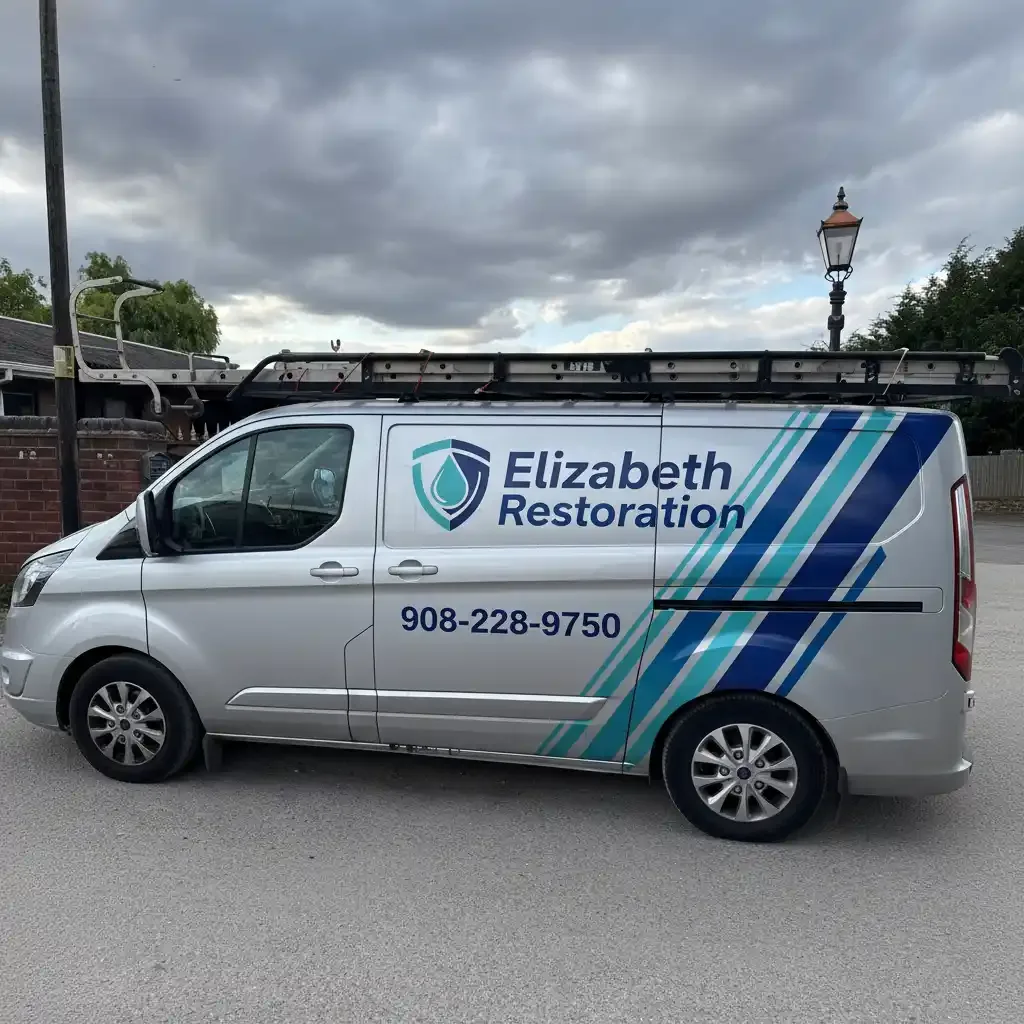
The first day after a Elizabeth fire matters because soot etches and odor sets the longer the cleanup waits. Elizabeth Restoration stabilizes the opening, dries the saturated areas, and maps soot travel through the HVAC and wall cavities in one coordinated push. Across Union County, multi-family buildings share air handling, so soot deposited in one unit shows up in another. Photos, scope notes, and odor-treatment records become a file your adjuster can sign off on without a fight. Call 908-228-9750 and we begin securing the structure immediately.
- Soot + smoke odor removal
- HVAC decontamination
- Pack-out + content cleaning
- Hydroxyl odor treatment
- Structural rebuild
- Insurance-scope documentation
What A Fire Crew Leaves For Us
The damage that sets the claim size usually has little to do with the visible burn area. Heat carries smoke up through balloon-frame cavities and shared chases, depositing residue floors away from where it started.
Our technicians deodorize the ductwork and air handler too, since a fire-affected HVAC redistributes the smell long after surfaces are clean. The file traces smoke beyond the burn room with photos, so the carrier funds the full cleanup rather than the visible fire alone.
What Proper Odor Work Looks Like
Owners who report the smell returning usually had ducts that were never properly cleaned. Containment keeps residue from spreading during cleaning, and HEPA filtration captures the airborne soot the work releases.
Where the ducts can be cleaned to standard, we clean them; where they cannot, we say so in writing. A properly deodorized property passes the test that matters: it still smells neutral weeks after we leave.
Beyond a single service line
A property loss in Elizabeth rarely stays in one lane — fire damage restoration often overlaps with flood cleanup, severe weather recovery, mold inspection and removal, sewage cleanup, rebuild and restoration, and our crew handles all of it under one contract. We dispatch the same standard to Newark fire damage restoration, Fire Damage Restoration in Union, Linden fire damage restoration, Rahway fire damage restoration and everywhere else across Union County.
If you searched for restoration company near Elizabeth, you have reached a local team — call 908-228-9750 any hour. For background, read Seasonal Basement Flooding in Elizabeth: The Union County Calendar of Water Risks and How to Prepare for Each on our blog, or head back to our Elizabeth home page to see everything we do.